


Worldwide Express Delivery • Ships from the US • Free Shipping

Secure & Protected • Purchase Orders Accepted
Payment methods
Your payment information is processed securely. We do not store credit card details nor have access to your credit card information.
Security

Genuine Products • Guaranteed Compatibility • We Ship Internationally

No Extra Payments Required • No Additional Costs
Tariffs, duties, taxes, and all applicable fees are included. Door-to-door delivery is provided under Delivered Duty Paid (DDP) terms. All shipments are fully tracked and insured.
Door-to-door delivery is provided under Delivered Duty Paid (DDP) terms, with full tracking and insurance coverage
We manage all worldwide import and customs clearance. All tariffs, duties, taxes, and customs fees are included. No additional charges upon delivery.
Description
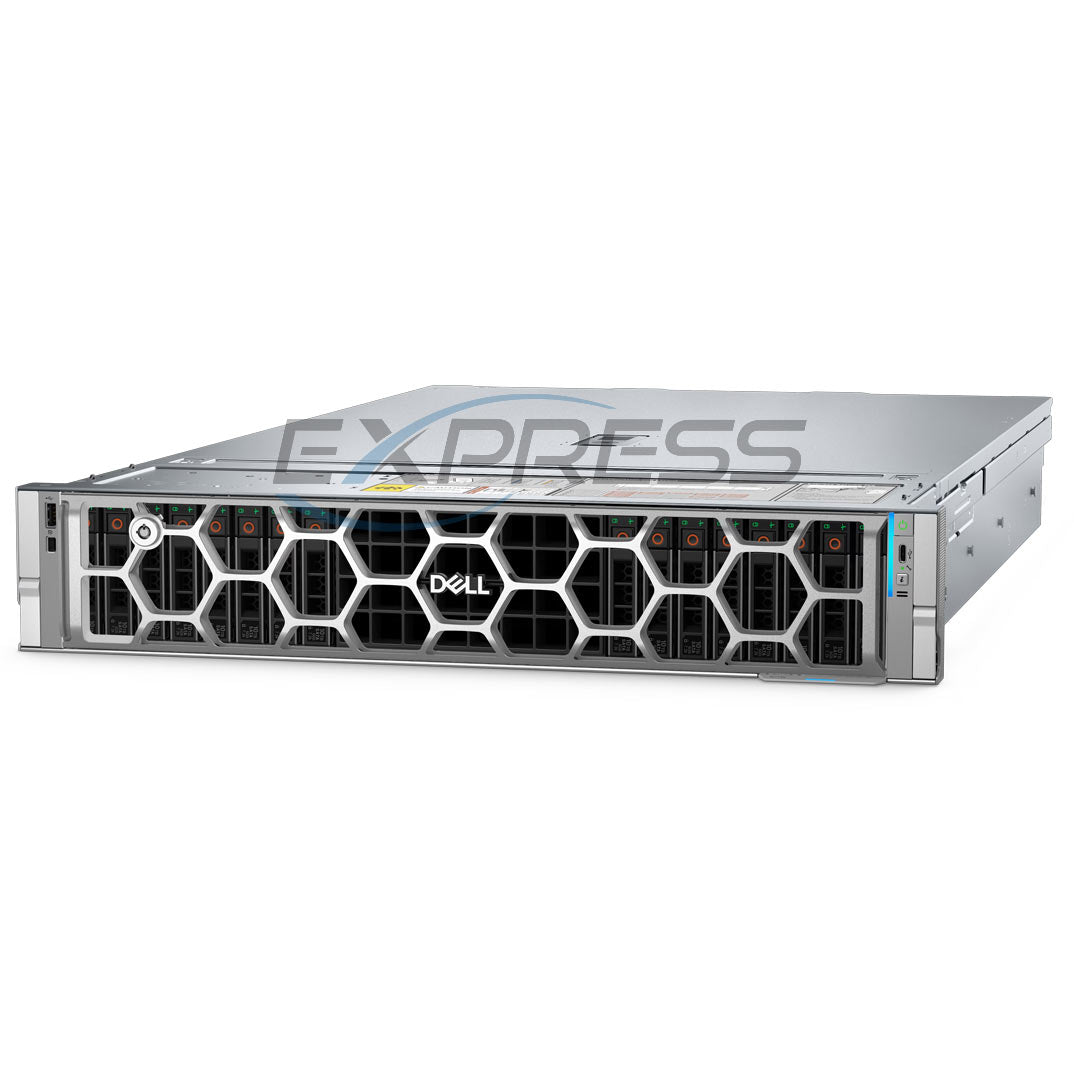
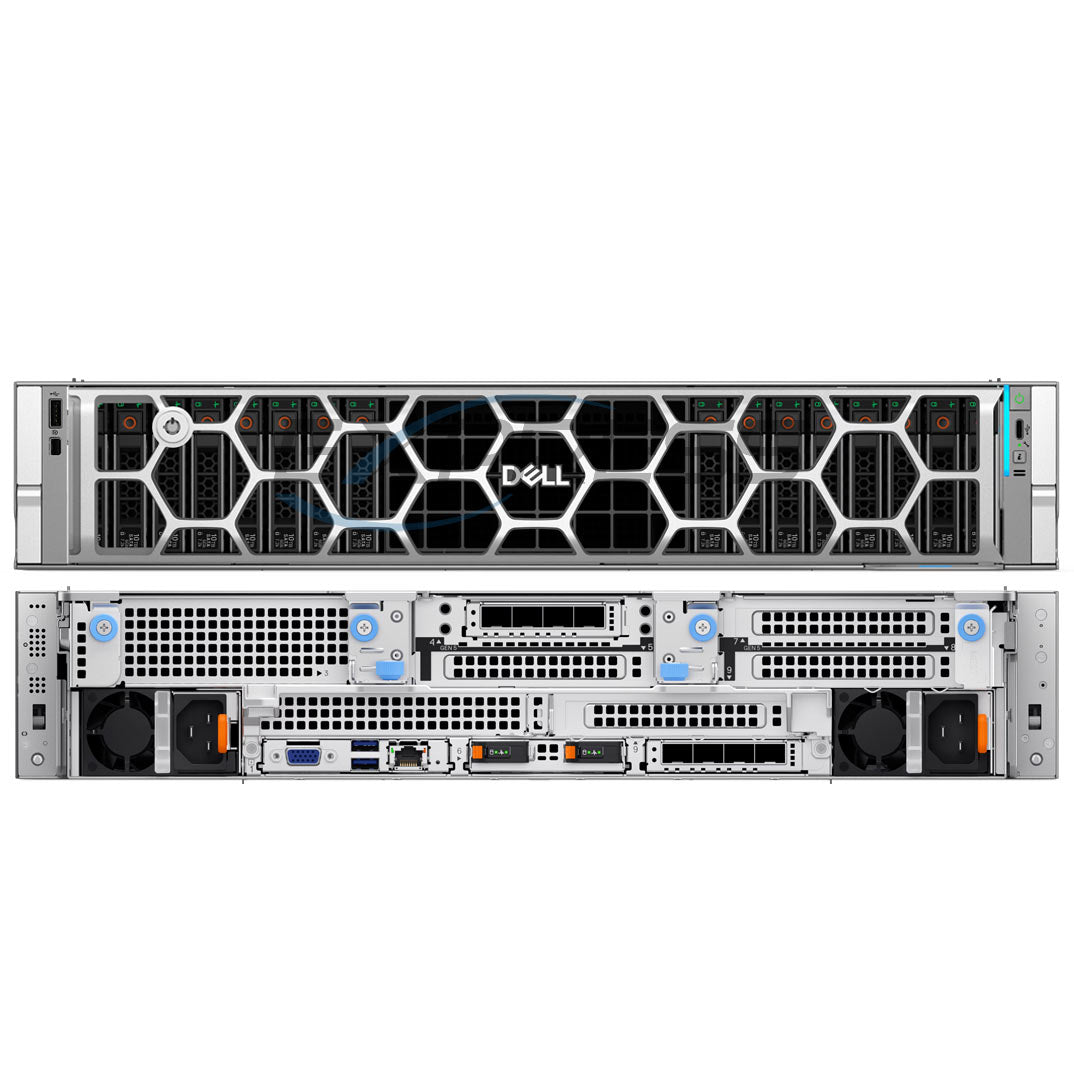
2U rack server
Processor | Max: 160 Cores1x AMD EPYC 9005 Series
Memory | Max: 6TB24 ECC DDR5 RDIMM 5200Mhz
Supports registered ECC DDR5 DIMMs only
2 x U.2
12 x 3.5" SAS/SATA
8 x 2.5 Universal/ 16 x 2.5" SAS/SATA / 24 x 2.5" SAS/SATA
16 x 2.5"SAS/SATA SSD + 8 x U.2 NVMe drives
8 x EDSFF E3.S / 16 x EDSFF E3.S / 32 x EDSFF E3.S / 40 x EDSFF E3.S
H365i, H965i, H975i
H965e, HBA465e
BOSS-N1 DC-MHS
USB
Rear I/O Supports 2x OCP 3.0
Remote Management:iDRAC10
PCIe Slots:8x G5
GPU:Up to 6x 75W SW
or 3x 450W DW
(Click to View)
- HPC
- Virtualization
The PowerEdge R7715 server is a single-socket optimized solution designed to deliver high performance, flexibility, and efficiency for a variety of applications. It is powered by 5th generation AMD EPYC™ processors and offers cutting-edge features that dynamically scale to push the upper limits of application performance.
Our partnership with AMD allows us to provide customers with a powerful 2U server that can handle a variety of multi-core workloads.
• The 5th generation AMD EPYC™ processor in the PowerEdge R7715 offers up to two-times better performance compared to previous generations
• With dual OCP and DDR5 memory support, efficiently address I/O and richer storage needs in a single-socket design
New configuration options for targeted workloads
The PowerEdge R7715 offers great flexibility with multiple configuration options to suit diverse customer needs.
• With support for up to 8 PCIe slots in a generous 2U form factor, it can easily adapt to different workload requirements.
• An ideal choice for businesses looking for a versatile server that can grow with their evolving needs.
One 5th Generation AMD EPYC 9005 Series processor with up to 160 cores per processor.

- New ‘Zen 5’ and ‘Zen 5c’ cores to address data center challenges such as delivering leadership performance.
- All processors in the series have support for up to 12 DDR5- 6400 memory channels.
- 128 PCIe® Gen 5 I/O lanes (up to 160 in 2-socket servers.
ⓘ PDF View AMD 9005 Series PDF here
 1U GPU Heatsink
 2U EXT HSK
 DLC Module
 Air Shroud
 GPU Air Shroud
- Supports up to 6 set Standard (STD) hot-swappable cooling fans, each consisting of a dual fan module.
- The High-Performance (Gold) Fan is required for TDP > 300 W, also for CPU 9175F and 9275
- The High-Performance (Platinum) Fan required for GPU Air Cooled Systems.
ⓘ Fans The PowerEdge R7715 supports up to 6 standard (STD) cooling fans.
| DIMM type | Rank | Capacity | DIMM voltage and speed |
Operating Speed | |
|---|---|---|---|---|---|
| 1 DIMM per channel (DPC) | 2 DIMM per channel (DPC) | ||||
| RDIMM | 1R | 16 GB | DDR5 (1.1 V), 6400 MT/s |
5200 MT/s | 4400 MT/s |
| 2R | 32 GB | DDR5 (1.1 V), 6400 MT/s |
5200 MT/s | 4400 MT/s | |
| 64 GB | DDR5 (1.1 V), 6400 MT/s |
5200 MT/s | 4400 MT/s | ||
| 96 GB | DDR5 (1.1 V), 6400 MT/s |
5200 MT/s | 4400 MT/s | ||
| 128 GB | DDR5 (1.1 V), 6400 MT/s |
5200 MT/s | 4400 MT/s | ||
| 8R | 256 GB | DDR5 (1.1 V), 6400 MT/s |
5200 MT/s | 4400 MT/s | |
 Front H965i
- RAID: 0, 1, 5, 6, 10, 50, and 60
- Non–RAID: Yes
- Host bus type: PCIe 4.0 x16
- Processor: Broadcom RAID-on-chip, SAS4116W chipset
- Power Backup unit: Battery
- Cache memory: 8 GB DDR4 3200 MT/s cache
- Cache function: Write-back, read-ahead, write-through, always write-back, no read-ahead
- Supported Drive Types: 22.5 Gbps SAS, 12 Gbps SAS, and 6 Gbps SATA/SAS. Gen3 (8 GT/s) and Gen4 (16 GT/s) NVMe
-
maximum SAS/SATA: w/o SAS Expander: 16 drives per controller
With SAS Expander: 240 SAS/SATA -
maximum NVMe: w/o PCIe Switch Expander: 8 drives per controller
With PCIe Switch Expander: 24 NVMe
 Dual Front H975i
 - Per Controller
- RAID: 0, 1, 5, 6, 10, 50, and 60
- Non–RAID: Yes
- Host bus type: PCIe 5.0 x16
- Processor: Broadcom RAID-on-chip, SAS5132W chipset
- Power Backup unit: Supercapacitor
- Cache memory: Integrated RAID cache
- Cache function: Write-back, write-through, always write-back, no read-ahead
- Supported Drive Types: Gen3 (8 GT/s), Gen4 (16 GT/s), and Gen5 (32 GT/s) NVMe
- maximum SAS/SATA: Not supported
- maximum NVMe: 32 drives
 Front H365i
 - RAID: 0, 1, and 10
- Non–RAID: Yes
- Host bus type: PCIe 4.0 x8 @ 16Gbps
- Processor: Broadcom RAID-on-chip, SAS4016 chipset
- Power Backup unit: No
- Cache memory: No
- Cache function: Write-through
- Supported Drive Types: 22.5 Gbps SAS, 12 Gbps SAS, and 6 Gbps SATA/SAS. Gen3 (8 GT/s) and Gen4 (16 GT/s) NVMe
-
Maximum SAS/SATA: w/o SAS Expander: 16 drives
w/ SAS Expander: Depends on your PowerEdge server model. -
Maximum NVMe: w/o PCIe Switch Expander: 8/16 drives
w/ PCIe Switch Expander: 32 drives

Riser Cards
Riser (R1d) Riser (R1e)
 Riser (R2n)
 Riser (R2m) Riser (R3a) Riser (R3b)
 Riser (R3e)
 Riser (R4a)
 Riser (R4b) Riser (R5a)
 Riser (R5b)
 Riser (R5f)
| Config No. | Riser configuration | No. of Processors | PERC type supported | Rear storage possible |
|---|---|---|---|---|
| RC 1: | R3b+R5b | 1 | Front PERC | No |
| RC 2: | R3e+R4b+R5b | 1 | Front PERC | No |
| RC 3: | R1e+R2n+R3e+R4b+R5b | 1 | Front PERC | No |
| RC 4: | R1e+R3e+R4a+R5b | 1 | Front PERC | No |
| RC 5: | R1e+R2n+R3b+R4b+R5f | 1 | Front PERC | No |
| RC 7: | R1d+R2n+R3a+R4b+R5a | 1 | Front PERC | No |
| RC 8: | R1e+R2m+R3b+R4a+R5b | 1 | Front PERC | No |
| Recommended System Memory Range (1.5x - 2x GPU Memory) | |||||||
|---|---|---|---|---|---|---|---|
| GPU Name | GPU Memory | x1 GPU | x2 GPUs | x3 GPUs | x4 GPUs | x5 GPUs | x6 GPUs |
| NVIDIA L4 | 24 GB | 36 - 48 GB | 72 - 96 GB | 108 - 144 GB | 144 - 192 GB | 180 - 240 GB | 144 - 288 GB |
| NVIDIA L40S | 48 GB | 72 - 96 GB | 144 - 192 GB | 216 - 288 GB | N/A | N/A | N/A |
| NVIDIA A16 | 64 GB | 96 - 128 GB | 192 - 256 GB | 288 - 384 GB | N/A | N/A | N/A |
| NVIDIA H100NVL | 94 GB | 141 - 188 GB | 282 - 376 GB | 423 - 564 GB | N/A | N/A | N/A |
| NVIDIA H200NVL | 141 GB | 212 - 282 GB | 423 - 564 GB | 635 - 846 GB | N/A | N/A | N/A |
 NVIDIA BlueField-3 2x200 GbE B3220 NVIDIA BlueField-3 1x400GbE B3140H
A Data Processing Unit (DPU) is a specialized processor designed to handle data movement, networking, storage, and security tasks in servers and data centers. It functions as a programmable SmartNIC with its own Arm CPU cores, hardware accelerators, and high-speed networking capabilities. DPUs offload heavy infrastructure workloads from the main CPU, freeing it up for application-level work. They are commonly used in modern cloud and AI environments to improve efficiency and performance at scale. Popular examples include NVIDIA’s BlueField series of DPUs.
A DPU is different from a GPU because it is optimized for moving, securing, and processing data in transit (networking & storage), whereas a GPU is built for performing massive parallel mathematical computations such as AI training and graphics rendering.
Key Differences Between DPU and GPU
- Purpose: DPU handles data movement, networking, encryption, and storage offloading;
- Workload: DPU excels at infrastructure tasks (packets, security, telemetry);
- Location & Role: DPU sits on the data path as a SmartNIC;
- Efficiency Goal: DPU improves overall server efficiency by freeing CPU cycles;
- Purpose: GPU focuses on heavy parallel math and compute workloads.
- Workload: GPU excels at AI/ML training, simulations, and rendering.
- Location & Role: GPU acts as a compute accelerator.
- Efficiency Goal: GPU increases raw computational power.
 BOSS-N1 DC-MHS
 Internal USB Boot
 Secondary blank (Default)
 Secondary with optional KVM
 Secondary with optional Quick Sync 2.0
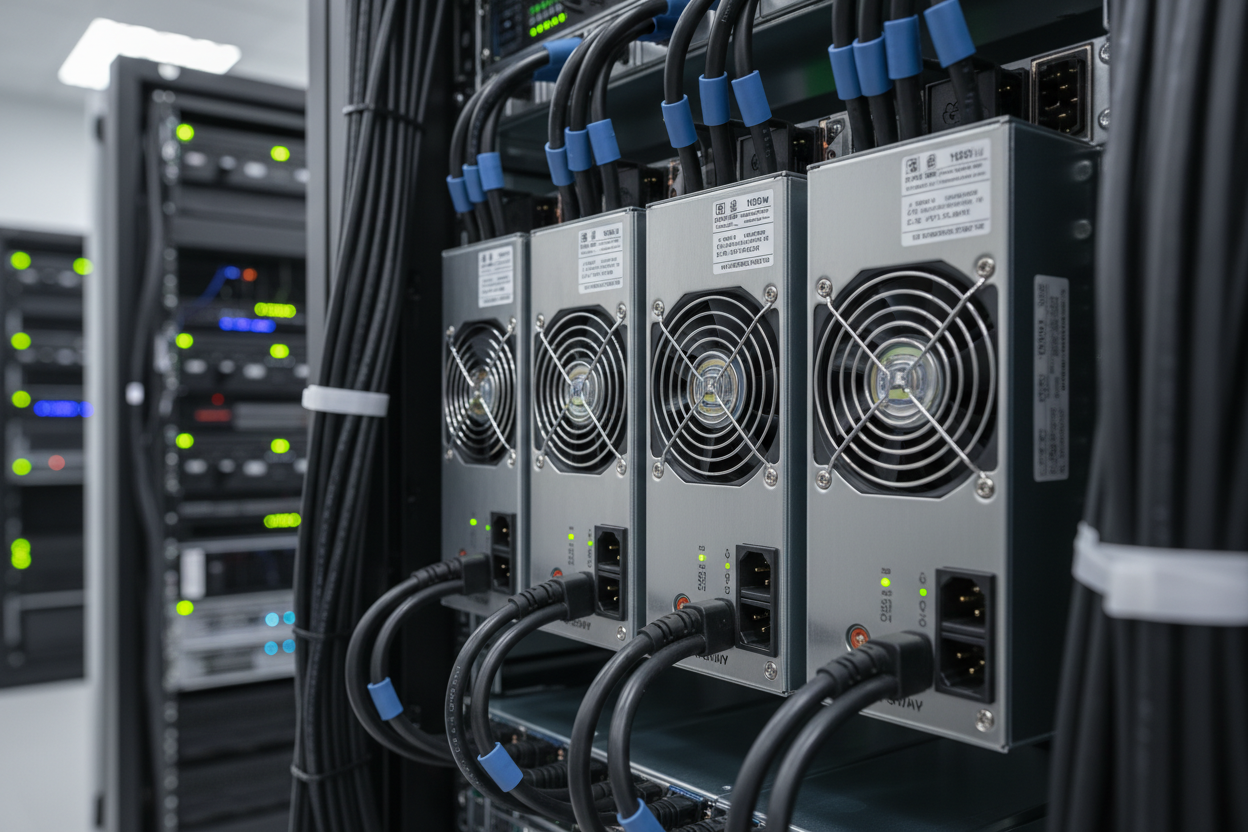
Not sure what power supply to use. Dell has a calculator for you - Click Here
| Form factor | Output | Power cord |
|---|---|---|
| 60 mm | 800 W Titanium mixed mode | C13 |
| 800 W Platinum mixed mode | C13 | |
| 1100 W Platinum mixed mode | C13 | |
| 1100 W Titanium mixed mode | C13 | |
| 1400 W Telco | DC power cable | |
| 1500 W Titanium mixed mode | C13 | |
| 1500 W 277 Vac and HVDC | APP/Saf-D-Grid | |
| 1800 W Titanium mixed mode* | C13 | |
| 73.5 mm | 2400 W Titanium mixed mode | C19 |
| 3200 W Titanium mixed mode | C19 | |
| 3200 W 277 Vac and HVDC | APP/Saf-D-Grid |
- Width: 482.0mm (18.97")
- Length: 771.62mm (30.38") Ear to PSU handle
- Height: 86.8mm (3.41")
- No backplane configuration 22.93 kg (50.55 lbs)
- 2 x U.2 SSD 20.24 kg (44.62 lbs)
- 8 x 2.5" Universal 26.26 kg (57.89 lbs)
- 8 x EDSFF E3.S Gen5 NVMe 27.33 kg (60.25 lbs)
- 12 x 3.5" SAS/SATA 26.85 kg (59.19 lbs)
- 16 x 2.5" SAS/SATA + 8 x U.2 26.58 kg (58.59 lbs)
- 16 x 2.5" SAS/SATA 26.81 kg (59.10 lbs)
- 16 x EDSFF E3.S Gen5 NVMe 28.68 kg (63.22 lbs)
- 24 x 2.5" SAS/SATA 27.67 kg (61.00 lbs)
- 32 x EDSFF E3.S Gen5 NVMe 26.68 kg (58.81 lbs)
- 40 x EDSFF E3.S Gen5 NVMe 28.38 kg (62.56 lbs)
Tariffs, All Taxes, Duties and Fees are Included
There are no additional costs or extra payments required. All shipments are fully tracked and insured. Duties, tariffs, taxes, and customs fees are included. We ship DDP via UPS, FedEx, DHL, USPS, couriers, redirectors, or the carrier of your choice.
Pay in your Currency, Easy Transfer

Server parts and IT equipment
View all
Shipping
Yes, we ship worldwide. We offer FREE shipping or if you want express delivery, you can choose the service and shipping costs will apply, they will be added at checkout.
No, taxes are included and with free shipping.
We use all major carriers, and local courier partners. You’ll be asked to select a delivery method during checkout.
Yes, we do offer free shipping to your country.
Product
We always aim for make sure our customers love our products, but if you do need to return an order, we’re happy to help. Just email us directly and we’ll take you through the process.
Other
You can contact us through our contact page! We will be happy to assist you.
Any question?
If we still haven't answered your question, you can contact us below and we will get back to you as soon as possible.